| Introduction |
| Context |
| Model |
| Process |
| Reliability |
| Conclusion |
| About Us |
Model
|
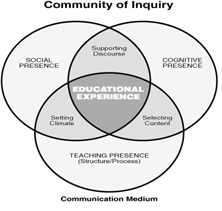
Are online discussions effective? To answer this question a rubric needs to be used to do a content analysis of the discussions. In this presentation, we discuss the Garrison, Anderson & Archer (2000) Community of Inquiry Model we used to analyse the online asynchronous discussions. This model includes three elements, which are said to provide the educational experience: a cognitive presence, a social presence and a teaching presence.
http://communitiesofinquiry.com/sub/coi_model.html The following is a description (taken directly from the website) of each presence: Cognitive presence is the extent to which the participants in any particular configuration of a community of inquiry are able to construct meaning through sustained communication. Social presence is the ability of learners to project their personal characteristics into the community of inquiry, thereby presenting themselves as 'real people.' Teaching presence is defined as the design, facilitation, and direction of cognitive and social processes for the purpose of realizing personally meaningful and educational worthwhile learning outcomes. See http://communitiesofinquiry.com/documents/Coding%20Template.pdf for a general template of the elements, categories and indicators of the model. |